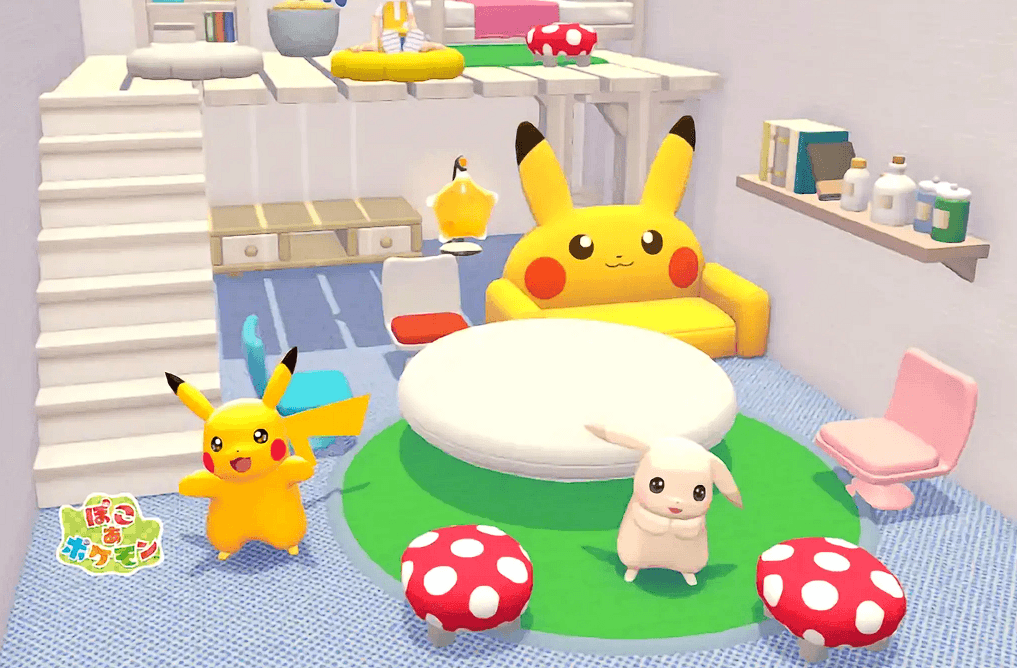
The best brand partnerships in gaming don't announce themselves with a megaphone. They slip into the world of a game so naturally that players forget there's a brief involved. The collaboration between IKEA Japan and Pokémon Pokopia is a textbook example of this, and it deserves more attention than the "cute crossover" coverage it's been getting.
This isn't just a licensing deal with a coat of Pikachu paint slapped on top. It's a genuinely considered integration that understood what the game is actually about, and built something that fits.
The Setup
IKEA Japan launched its "Find Fun Living with Pokémon at IKEA" campaign to mark two milestones: the brand's 20th anniversary in Japan and the 30th anniversary of the Pokémon franchise. The campaign runs on two tracks simultaneously. Within Pokémon Pokopia, IKEA created an IKEA Island that players can visit, featuring homes designed by IKEA's interior designers with interiors inspired by Pikachu and Snorlax. Those same rooms were then physically recreated inside IKEA Japan stores, so players could experience the game's world in real life.
The in-store activation ran from April 1st to May 10th 2026, complete with a stamp rally across IKEA locations, a raffle for prizes including 100,000 yen IKEA gift cards, and a Pokémon Pokopia makeover of the in-store restaurant. The IKEA Island in-game remains accessible through June 30th.
Why It Works
The strategic logic here starts with understanding the game. Pokémon Pokopia is a relaxing sandbox title where players control a Ditto disguised as a human, building a customized town alongside various pocket monsters. The gameplay is built around crafting furniture and constructing houses. IKEA is, obviously, a company that sells furniture and believes deeply in the idea of the home as a reflection of personality. The alignment isn't cosmetic; it's structural.
IKEA Japan's official statement captured this directly: "Over its 20 years in Japan, IKEA has believed that a home you truly love grows with you. The message we want to convey is that, just like in the Pokémon Pokopia game, everyone can create a home that reflects their own personality in real life." That's not marketing language bolted onto a deal. That's a brand finding a game that already lives inside its core proposition.
What makes this even sharper is the audience data sitting underneath it. According to GWI, 26% of Gen Z gamers in Japan are Home and Lifestyle enthusiasts, and Gen Z gamers in Japan are 65% more likely to have purchased from IKEA in the last three months than the average person. IKEA didn't need to convert anyone. The overlap between its existing customer base and Pokopia's player community was already there. The collaboration simply gave that audience a reason to engage more deeply with both.
The Bidirectional Model
The two themed rooms are doing something smart. The Pikachu room centres on playful socialising, while the Snorlax room leans into cosy, slumber-inviting relaxation. These aren't random Pokémon choices. Both map cleanly to moods and lifestyles that IKEA actually sells products around. The designers understood the brief at the character level, not just the brand level.
What elevates this beyond a standard in-game ad placement is the two-way flow of the activation. The game world bleeds into physical retail, and physical retail points back to the game. Players who visit the IKEA Island in Pokopia are given context to visit a store. Store visitors who interact with the stamp rally or photo spots are nudged back toward the game. The real-life rooms use IKEA catalogue items to evoke the essence of each in-game piece of furniture, rather than making a direct recreation. That's a deliberate choice: it keeps the IKEA identity intact while making the connection feel earned rather than manufactured.
This kind of bidirectional activation is still relatively rare in gaming partnerships. Most brands enter a game and stop there. The ones that build a loop between the digital experience and something tangible are the ones that generate recall and genuine consumer behaviour, not just impressions.
What It Signals
Pokémon Pokopia is a new IP on Nintendo Switch 2, and it arrived with a wave of cultural momentum. IKEA moved quickly and with precision, reading the game correctly and building something that didn't feel opportunistic. For brands watching from the sidelines, that speed and cultural literacy is the lesson. Gaming moments are time-sensitive. The window to enter authentically closes fast once a title peaks.
When the audience data is this clear, the question for brands isn't whether to enter gaming. It's whether they're entering it in a way that matches how their customers already live inside it. IKEA had the numbers, found the right game, and built an activation that respected both.
This collaboration didn't make noise. It made something worth visiting.
If you are a brand or retailer looking to integrate into gaming culture in a way that builds genuine relevance and long-term impact, Mana Partners helps you make lore, not noise.
Author

Seif Seoudy
We build brands that speak the language of gamers. Authentic, electrifying, unforgettable.