76% of Gen Z World Cup fans purchase snacks monthly. Only 44% of them buy crisps. That gap is not a category problem. It is a positioning opportunity, and it is exactly what Lay's built its entire FIFA World Cup 2026 strategy around.
Most food brands treat major sporting events as reach plays. They buy the badge, run the spots, and measure impressions. Lay's is doing something structurally different. The brand is using the World Cup to build a consumption occasion that does not yet fully exist, converting passive football fandom into an active, snack-anchored ritual. The vehicle for that conversion is some of the most deliberately assembled celebrity talent in recent sports marketing history.
What Lay's Built
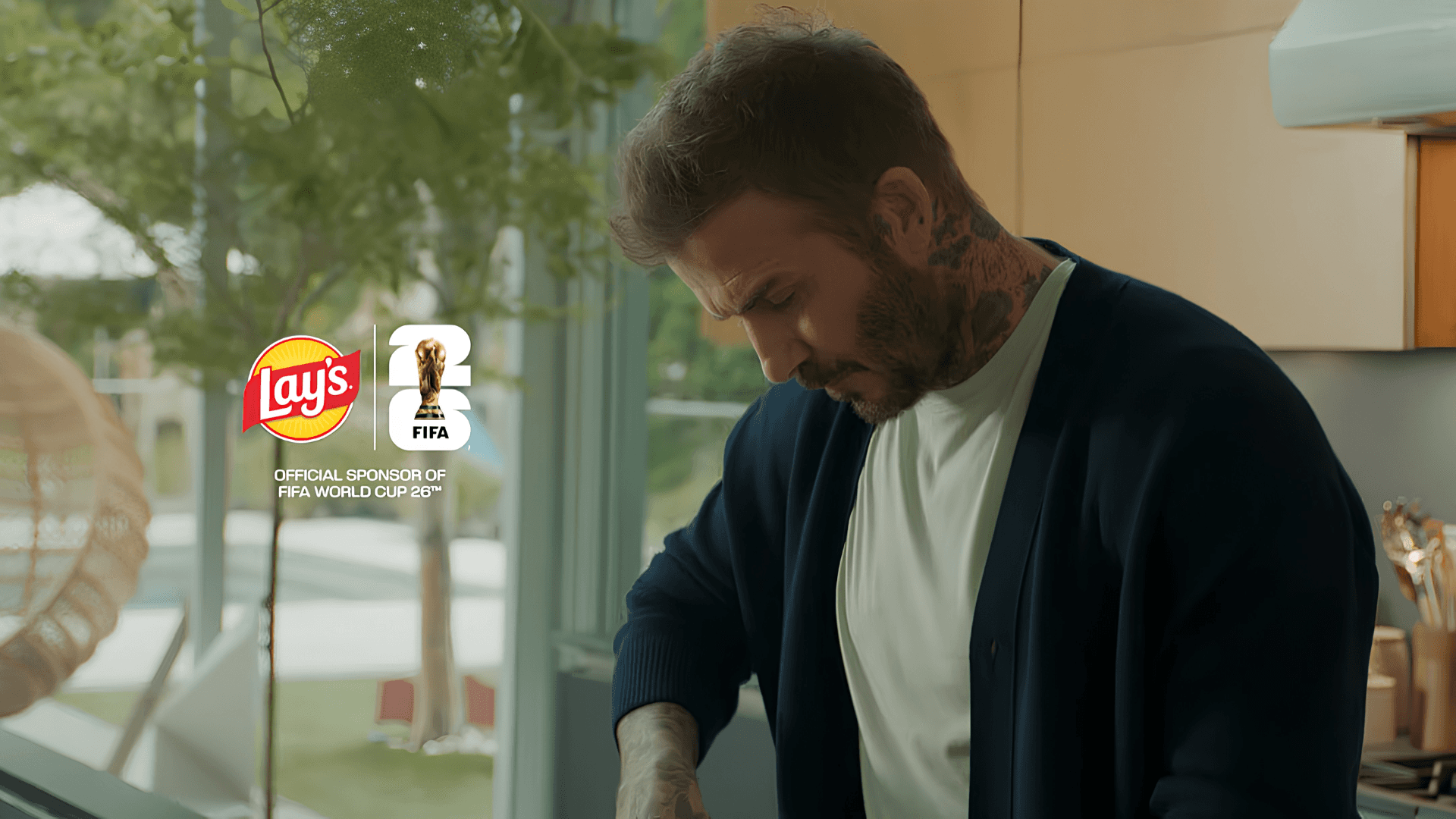
Launched in May 2026 across nearly 90 global markets, the "Epic Watch Party" campaign placed Lionel Messi, David Beckham, Thierry Henry, Alexia Putellas, and Steve Carell inside real supermarkets, surprising unsuspecting shoppers with invitations to exclusive watch parties. No controlled studio environments. No scripted product holds. The creative was designed to feel discovered rather than broadcast, generating the kind of organic social spread that paid media cannot fully replicate.
The campaign extends "No Lay's, No Game," a platform now entering its fourth consecutive World Cup cycle. A dedicated WhatsApp channel with over 10 million engaged followers delivers live reactions, voice notes, and behind-the-scenes content from the celebrity cast throughout the tournament. This is not a campaign with a launch date. It is a media infrastructure built around a sporting moment.
In Egypt, Chipsy, PepsiCo's local Lay's brand and an official FIFA World Cup 2026 sponsor, is running a parallel activation that demonstrates how well this global brief translates when a local market genuinely understands its audience. The "No Chipsy, No Game" campaign features Tamer Hosny, Akram Hosny, Ibrahim Fayek, and Egyptian football legends Shikabala and Mohamed Barakat in humorous, football-themed scenarios built around match-day culture. Fans who purchase special Chipsy packs and scan the QR code on the packaging can win World Cup 2026 tickets, streaming subscriptions, and other prizes. The mechanic is simple. The cultural casting is precise.
Why the Talent Strategy Is the Media Strategy
The Steve Carell casting has drawn attention for its unexpectedness, a Hollywood comedian alongside Messi and Beckham in a football campaign. That surprise is the point. GWI data shows this Gen Z World Cup audience is 70% more likely to discover new brands through celebrity endorsement than the average consumer, and 63% more likely to purchase based on an influencer recommendation. Lay's did not cast Carell despite his distance from football. They cast him because of it, deliberately broadening the tent beyond hardcore supporters to reach the 56% of snack buyers who do not currently associate crisps with match day.
The tiered talent structure reinforces this. According to Signal, Mana Partners' cultural intelligence tool, "Lay's Messi" content has generated over 98 million views, vastly outperforming every other talent entity in the campaign. Messi and Beckham serve top-of-funnel mass awareness. Henry and Putellas, whose channels deliver exceptional engagement rates despite lower overall reach, operate inside specific football communities where depth of interaction matters more than scale. Each talent tier is doing a distinct job.
On platform, the "No Lay's, No Game" slogan maintains evergreen cultural durability long after its initial posts. TikTok has delivered over 65 million views for the core campaign, while broader search queries around "World Cup chips" rank in the 100th percentile on YouTube, revealing a bifurcation that smart brands are already exploiting: viral participation on TikTok, high-intent discovery on YouTube.
The Sprint Problem
Signal data surfaces one tension worth watching. Specific "Watch Party" content generates strong engagement while active but carries a high decay rate and a very short cultural shelf life. Brands treating their World Cup watch party activation as a single evergreen launch will see relevance collapse well before the final whistle. The brands that win this tournament will be the ones running continuous, short-burst creative refreshes throughout the competition, not relying on a campaign launch moment to carry them across six weeks of football.
Lay's architecture, a durable platform, tiered talent, localised market executions, and a WhatsApp channel built for ongoing content delivery, suggests the brand understands this. The question is whether the brands activating alongside them do.
Building a consumption occasion is harder than buying sponsorship real estate. It requires cultural fluency, audience precision, and the discipline to keep showing up after the opening ceremony excitement fades.
Lay's has been doing this for four consecutive World Cups. That consistency is not a media budget. It is a strategic commitment.
If you are a brand looking to integrate into football culture and major sporting moments in a way that builds long-term relevance rather than campaign-cycle awareness, Mana Partners helps you make lore, not noise.
Author

Seif Seoudy
We build brands that speak the language of gamers. Authentic, electrifying, unforgettable.


