
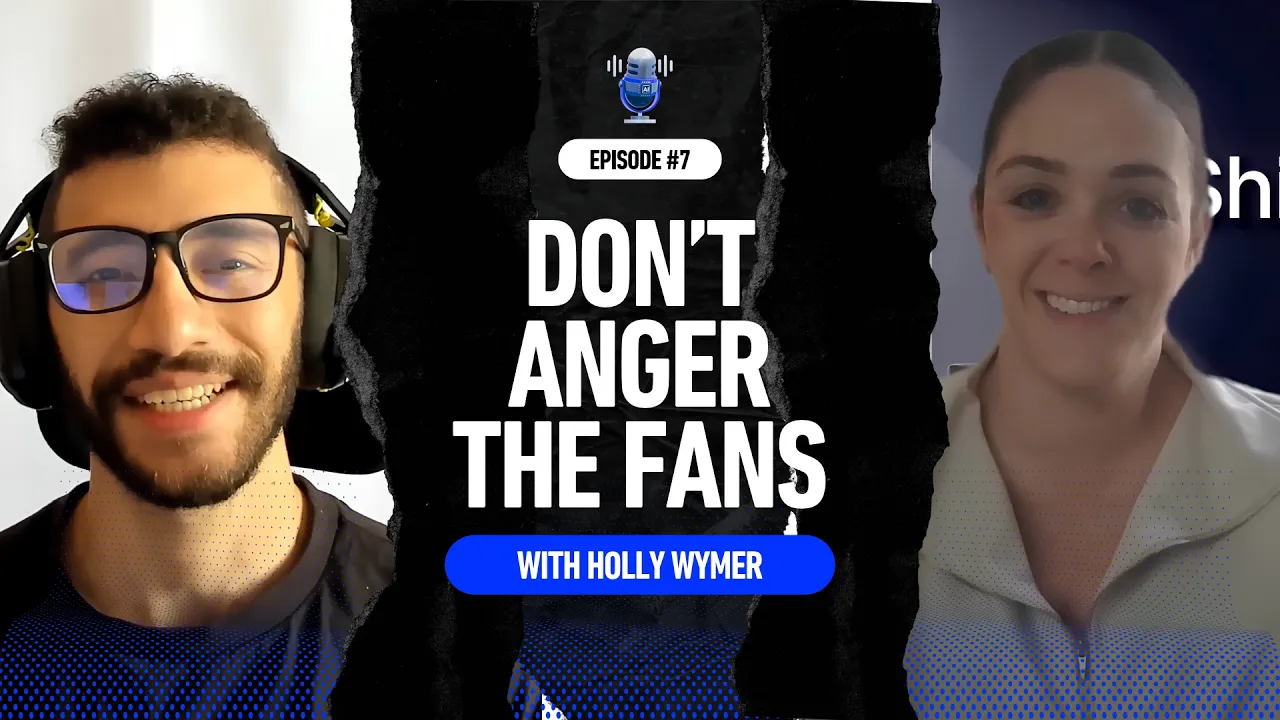
Esports sponsorship works when brands stop buying exposure and start earning attention, says Shikenso's Holly Wymer on Mana Culture Pulse. Every brand entering esports arrives with the same spreadsheet. Impressions, media value, share of screen. All of it is measurable, and almost none of it answers the question a CMO should be asking: if a fan in the arena were shown your logo, could they tell you what your company does? That tension sits at the center of how esports sponsorship is bought, sold and reported, and it is the thread running through our latest episode.
Holly Wymer, Key Partnerships Manager at Shikenso Analytics, joined Mana Culture Pulse to talk about it from every side of the table. Her career started on global sponsorship accounts across the World Cup, the Euros and the Olympics, moved through cricket and entertainment partnerships, then to London Stadium on the rights holder side, and then into esports at BLAST. Today she sits at Shikenso, measuring what brand partnerships actually deliver. She has built activations, sold them, and now audits them. That vantage point is rare, and it shows.
Why Esports Activations Work Differently From Sport
Moving from sport to esports, Holly had to unlearn the instinct to make as much noise as possible. In sport, sponsorship is often a badging exercise: millions are watching, so the logo goes in the frame and the exposure follows. In esports, the work that lands is targeted, intentional and built around what fans genuinely care about.
Her clearest example is the content series The Dispatch, created by ESL FACEIT Group with DHL. It works as standalone content and as an event asset. The team released one episode first, read the performance, and only then rolled out the rest. It is now into a second season. DHL is a corporate giant whose core business Holly happily calls unglamorous, yet the little DHL truck that wheels onto the stage has changed how fans see the brand. That is what happens when a rights holder and a partner decide to have fun with the assets in the contract.
The KitKat Rule: Never Interrupt the Game
The sharpest lesson of the episode came from a small moment at BLAST's first Dota event. KitKat was a sponsor, and rather than layering on a wipe or an animation, the team turned the in-game items that boost a player's health into KitKats. Players collected them and used them to keep playing.
It did not interrupt the broadcast. It did not animate in. Nobody ate a chocolate bar on camera. The brand was present, the product was part of the play, and the viewing window stayed untouched. KitKat has since become a sponsor of the LEC, which tells you the idea had legs.
Holly's analytics lens backs the instinct. Animations are on screen for so little time, sometimes a single second, that their measurable value is low and viewers can miss them entirely. Sponsor bars are a logo exercise, but they are always there and never get in the way. Her rule from BLAST was simple: don't anger the fans. They are there for the game, so enhance the game.
Prompted Recall, Brand Metrics and the Logo Problem
The more uncomfortable point is about measurement. Logo badging will always deliver impressive media value, especially in esports where streams reach millions of viewers. But show a fan a logo and ask if they have seen it, and they will say yes. Ask them where they saw it, unprompted, and most cannot answer. Prompted recall flatters the sponsor by handing over the answer.
For Holly, this is why qualitative data matters as much as quantitative, and why even lower-tier partners need to invest in educating audiences about who they are. It is also why rights holders can fall into a loop of repeating what has worked before because the media value looks healthy, without asking whether it serves that specific brand's brief. Every partner has a different brief, and a blanket approach rarely hits the target.
B2B in Esports: The Room Matters More Than the Stream
The conversation closed on B2B partnerships, where Holly argued that reach on the broadcast is often the wrong metric entirely. If your target audience is not the fan watching, a logo on the stream is a misplaced bet. The person a B2B brand needs may be having a drink in the hospitality lounge, and the best tournament organizers build spaces to put the right people in the same room. We have seen the same split in a Visa sponsored tournament Mana has worked on, where the fan facing brand activity ran separately from a B2B networking space most viewers never knew existed. Holly's view is that this is exactly how it should work.
She also pointed to the shift in what brands now ask for. A few years ago, performance reporting was rarely requested. Today esports is treated as a revenue stream, partners want multi-year relationships, and they use data in real time to cut what is not working and double down on what is. Longevity, as she put it, is the word of the moment.
Logo badging gets you seen. Intention gets you remembered.
If you are a brand or rights holder looking to integrate into esports in a way that builds relevance and long-term impact, Mana Partners helps you make lore, not noise.
Author

Seif Seoudy
We build brands that speak the language of gamers. Authentic, electrifying, unforgettable.


