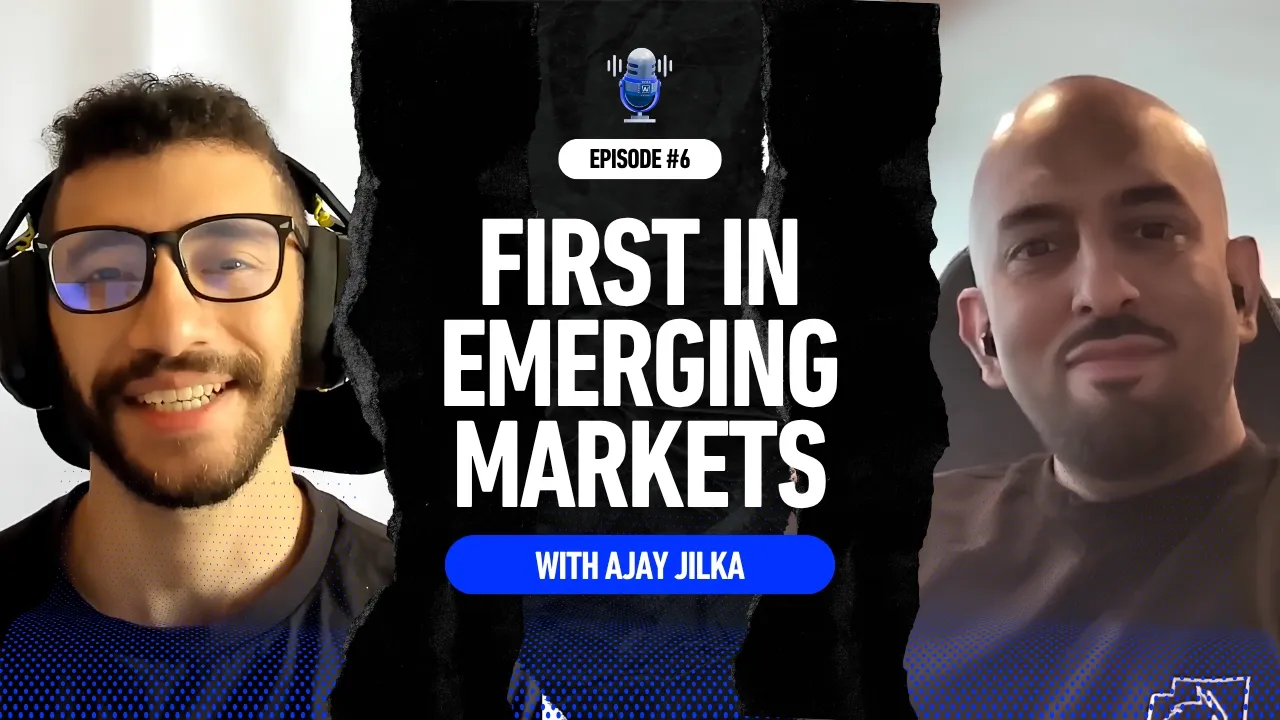
Most brand strategy starts with data. Emerging market esports starts without it. When a market has no infrastructure, no agencies and no benchmark, the playbook has to be written while the first event is already being built.
That is the world Ajay Jilka works in. On the latest Culture Pulse episode, the Moonton Games esports lead, who manages product development and esports across Eastern Europe, Central Asia, Turkey and parts of Western Europe for Mobile Legends: Bang Bang, explains how gaming marketing actually works when you are first in, and what brands should ask before they follow.
From Beijing Sports Marketing to Mobile Legends Esports
Ajay's career was never conventional. In 2011, two days before a flight home to a job in London, he decided to stay in Beijing. He did not speak the language and had no role lined up, so he researched every sports marketing company in China and cold called until one answered. That led to Octagon, work on Disney, Johnson & Johnson and the FIFA World Cup, then athlete marketing, then a 2017 League of Legends World Championship at the Bird's Nest that pulled him into gaming for good. A Nike partnership with League of Legends in China followed. In 2021 he joined Moonton Games in Singapore, where he has now spent six years.
Launching MPL Brazil in 45 Days: How to Judge Emerging Market Readiness
One week into the job, Ajay was asked to launch MPL Brazil. The timeline was 45 days, with no local team and no agency in place. It became the first professional Mobile Legends league outside Southeast Asia.
His test for whether a market is ready is deliberately simple: do you have users? Production quality and social content mean little if there is no audience to serve. From there, he describes the work as half hardcore esports and half management consultancy, with market sizing, community marketing and local experts hired because no one person speaks every language in the region.
Online Viewership and Offline Audiences Do Not Convert Neatly
Two examples show why esports sponsorship in new markets is hard to forecast. At the first offline event for Liga Latin America, the broadcast suffered a six hour delay, yet the crowd still gave brand partners a live audience that the market had never seen. In Mongolia, the reverse happened. About 3,000 people attended in person while fewer than 2,000 watched online in Mongolian.
Both are signs of a young market, and both create the same problem for marketers. Brands and media buyers want clean metrics, and early on the data is thin. Ajay's view is that reach and engagement help, but the real asset is knowing your community. If you cannot describe the audience, you cannot sell sponsorship against it.
Brand Partnerships in Esports: A Revenue Play or a Growth Play?
Ajay separates two models. In mature regions with franchise teams and revenue share, partnerships are judged on hard numbers, from sponsorship fees to in-game integrations. In growth markets, publishers look for partners who will co-invest, including tournament operators, federations, blue chip brands and even governments using esports for destination branding, as seen in Singapore and Shanghai.
For a non-endemic brand, the challenge is internal. A company like Coca-Cola has decades of data on sports ROI and almost none on esports. His advice is to find an internal champion or an adviser who understands the audience, and he suggests something unfashionable: hire the student leaders who run university esports clubs. They know the communities, and the investment is real money, not charity.
Mistakes Brands Make When Entering Emerging Gaming Markets
The first mistake Ajay names is copying competitors. Learn from their moves, but tit for tat is not a strategy. The second is assuming a model that worked in a mature market will transfer. It rarely does, which is why global esports deals are rare and most success is local. Every market has a regional player outsiders have never heard of, such as a Mongolian sports broadcaster that runs its own esports arm. Red Bull stands out as the exception, a brand embedded across gaming, sport and entertainment for decades.
Why the Markets CMOs Avoid May Hold the Biggest Opportunity
The sharpest moment in the conversation concerns risk. When global brands left Russia, gamers stayed. They kept playing, kept watching esports and were left wondering who would serve them. Ajay calls that an opportunity, and he cautions marketers that headlines and consultancy reports do not always describe what is happening on the ground.
When a CMO asks him which market to enter next, his questions are practical. Do you have a local office, local people and local infrastructure? Are you building something or running one campaign to say you are global? In his words, are you for real?
That is a useful filter for any brand weighing esports marketing in a new region. Presence beats announcements, and community knowledge beats market size.
The brands that win emerging markets are the ones that arrive early enough to learn and committed enough to stay.
If you are a brand or publisher looking to integrate into gaming and esports in a way that builds relevance and long-term impact, Mana Partners helps you make lore, not noise.
Author

Seif Seoudy
We build brands that speak the language of gamers. Authentic, electrifying, unforgettable.