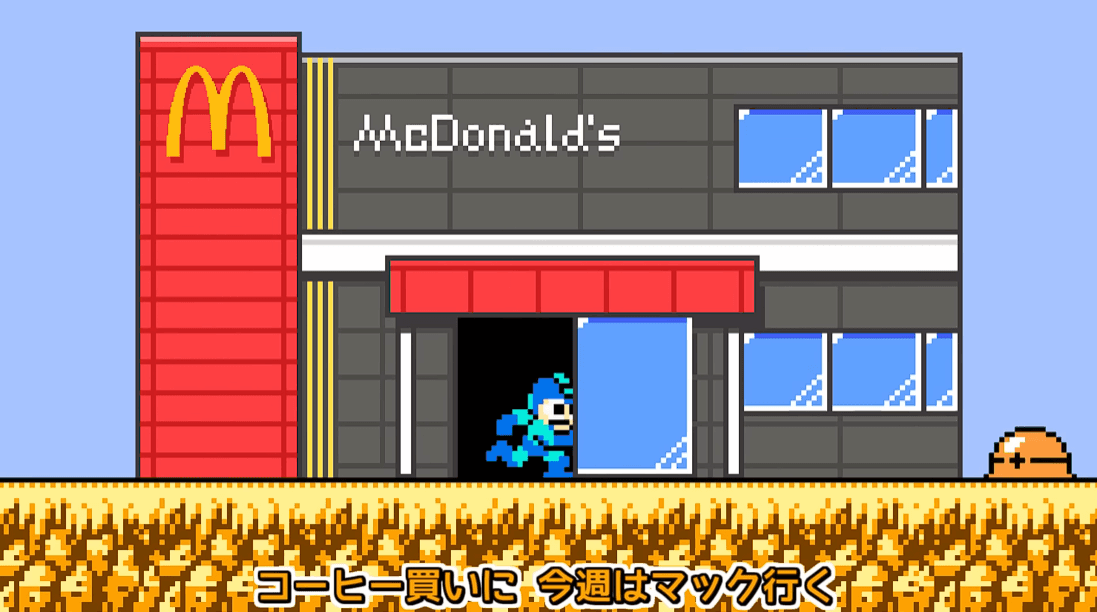
When McDonald's Japan launched a Mega Man collaboration this week, the gaming internet paid attention. That alone is notable.
Most QSR brand activations get a polite nod from a few trades and disappear. This one travelled. The question worth asking is why, and what it tells us about how brands should be thinking about gaming audiences in markets like Japan.
The data makes the strategic logic visible. According to GWI, 85% of weekly McDonald's customers in Japan play video games. Gen Z gamers in Japan are 80% more likely to eat at McDonald's weekly than the average person. Anime viewers are 40% more likely to be weekly customers. McDonald's Japan did not need to convert a gaming audience. They needed to give the one already ordering from them a reason to feel seen.
What the Activation Looks Like
The collaboration, running from 22 May to 21 June 2026, is built around McDonald's summer iced coffee range and anchored by a promotional video supervised by Capcom. The creative centrepiece is a new version of "Air Man ga Taosenai," a fan-made song originally posted to Nico Nico Douga in 2007 that became one of the most beloved pieces of Mega Man community culture: a tribute to the maddening difficulty of defeating Air Man in Mega Man 2. The song eventually earned official recognition from the franchise. McDonald's didn't license a logo. They licensed a community feeling.
The campaign extends into the My McDonald's rewards app, where loyalty points can be redeemed for exclusive mobile wallpapers featuring 8-bit versions of Mega Man and Dr. Wily, artwork from the upcoming Mega Man Dual Override, and a "Road to 40" image honouring the franchise's approaching 40th anniversary. It is a clean mechanic: no friction for fans who are already customers, and a natural touchpoint for lapsed customers who grew up with the Blue Bomber.
Why the IP Choice Was Precise, Not Decorative
For Japanese millennials and Gen Z, Mega Man was never purely a video game franchise. It existed as a multimedia ecosystem, with the games, anime, and manga all carrying equal cultural weight across different points of a fan's life. That breadth matters. It means the franchise has emotional surface area that a single-medium IP simply does not. A player who never finished Mega Man 2 might still know every word of "Air Man ga Taosenai" from the internet. An anime viewer who never touched the games might have grown up with the Rockman animated series. McDonald's is not speaking to one community. They are speaking to a constellation of overlapping ones, all of whom share a cultural reference point.
The decision to anchor the campaign in a 19-year-old fan meme rather than official franchise artwork is where this gets strategically interesting. It signals cultural fluency, not just licensing. Any brand can put a Mega Man helmet on a cup. It takes a different level of understanding to build a campaign around something the community created for itself. The fans who recognise that reference will not just notice it. They will feel it.
This is what audience-first brand activation looks like in practice. Not "how do we reach gamers?" but "our customers are already deeply embedded in gaming culture, what do we give them that earns a genuine moment?"
The Broader Signal for Brands
McDonald's Japan has been quietly building a track record here. Last year's Street Fighter collaboration with Capcom introduced themed menu items. This year they have gone deeper into the franchise relationship, moving from product placement into cultural storytelling. That progression is not accidental. It is the difference between a brand that activates in gaming and a brand that is developing genuine fluency in it.
For brands operating in Japan specifically, the audience data points to something that is still underacted on: gaming is not a niche vertical to reach certain consumers. It is the cultural infrastructure that a significant portion of the population moves through daily. The overlap between gaming, anime, and weekly QSR consumption in Japan is not a coincidence. It is a portrait of how entertainment culture and everyday life are integrated for these audiences.
The smartest move here was not the Mega Man license. It was McDonald's Japan trusting that their own customers were worth speaking to with this level of specificity.
If you are a brand or publisher looking to build gaming partnerships that go beyond logo placement and into genuine cultural relevance, Mana Partners helps you make lore, not noise.
Author

Seif Seoudy
We build brands that speak the language of gamers. Authentic, electrifying, unforgettable.