Most football sponsorships are built around reach. Red Bull built one around participation, and the numbers tell you exactly why that distinction matters.
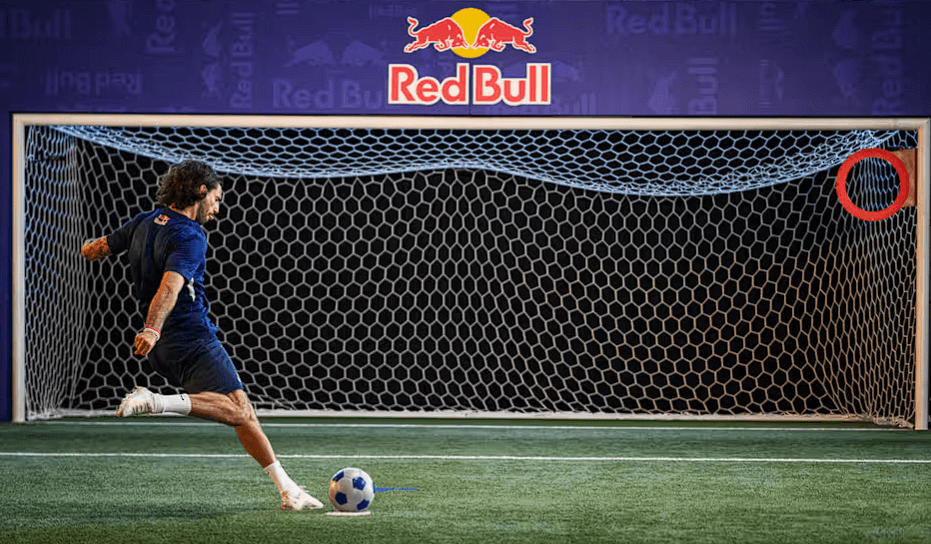
The Red Bull Ultimate Football Challenge brought together Neymar Jr, Endrick, Dominik Szoboszlai, and Richard Ríos across three countries for a series of technically demanding skill challenges, each custom-built to test the specific qualities that define each athlete: aerial control in São Paulo, movement and close control on giant moving treadmills in Bilbao, and precision passing on an illuminated nine-metre target wall in Salzburg. Jürgen Klopp, Red Bull's Head of Global Soccer, presided over all three. Former legends Zé Roberto, Thiago Alcântara, and Bastian Schweinsteiger were on the ground as guides. Freestyle world champion Séan Garnier and RB Leipzig midfielder Nicolas Seiwald served as challenge partners.
This was not a brand appearing beside football. This was a brand embedded inside it.
The Audience Red Bull Was Actually Speaking To
The strategic logic behind this activation becomes clearer when you look at who Red Bull's consumer base actually is. According to GWI, 87% of Red Bull's weekly consumers are football fans. More importantly, those same consumers are 66% more likely to play football than the average person. That is not a passive fanbase watching highlights on a Saturday afternoon. That is a participant culture: people who train, compete, and engage with the game on a physical level.
The distinction matters enormously for how you design content. Passive audiences consume. Participant audiences remix, replicate, and compete. The Red Bull Ultimate Football Challenge was built for the second group.
What the Numbers Actually Confirm
Signal, Mana Partners' cultural intelligence tool, tracked the campaign's performance across platforms and the data reinforces how precisely the activation landed.
The core campaign term "Red Bull Ultimate Skill Challenge" generated 18.96 million views, with 18.63 million originating from TikTok. The broader hashtag "#ultimateskillchallenge" scaled to 44.99 million views, residing entirely on YouTube. Total campaign reach: 63.9 million views across two distinct platform behaviors. TikTok carried the talent-driven cultural moment. YouTube scaled the underlying challenge format into evergreen content.
The engagement quality is equally telling. The campaign recorded an intensity score of 65.5, more than three times the benchmark for comparable challenge formats. The Fan Content Index of 80.94 signals that audiences were not just consuming official uploads. They were actively creating their own compilations, edits, and remixes of the Neymar and Klopp moments.
When your audience becomes your distribution network, you have built something paid media cannot replicate.
The Strategic Architecture Behind It
What Red Bull executed here was not one campaign. It was two simultaneous content strategies running in parallel.
On TikTok, the talent pairing of Neymar and Klopp created an immediate cultural spark. High intensity, high decay, short window. The kind of moment that demands brands capture attention and convert it fast. On YouTube, the challenge format itself took on a life of its own, accumulating nearly 45 million views independent of the specific branded moment. Low decay, long runway, evergreen value.
Most brands plan for one or the other. Red Bull planned for both, and structured the content accordingly.
There is one nuance worth noting. Signal data shows that talent with significant personal brand gravity, particularly Klopp, occasionally drew attention back toward their own broader football ecosystem rather than directly toward the Red Bull brand. The "Jurgen Klopp challenge" query drove adjacencies toward Liverpool and Real Madrid rather than Red Bull. This is not a failure of execution, but it is a signal for future campaign design: when you activate talent at this level, the brand needs to be embedded into the action itself, not just the title card.
What This Signals for Sports Marketing
The Red Bull Ultimate Football Challenge is a case study in audience-first brand activation. The campaign worked because Red Bull understood something most sports sponsorships still get wrong: the most valuable football audiences are participants, not spectators. They respond to content that respects their relationship with the game, not content that borrows football's badge to sell an unrelated product.
Building for participants means designing content that invites engagement, creates a challenge format that audiences can replicate, and distributes across platforms according to how each platform actually behaves.
The 63.9 million views are the result. The participant audience strategy is the reason.
If you are a brand looking to integrate into sports and football culture in a way that builds genuine relevance and long-term impact, Mana Partners helps you make lore, not noise.
Author

Seif Seoudy
We build brands that speak the language of gamers. Authentic, electrifying, unforgettable.