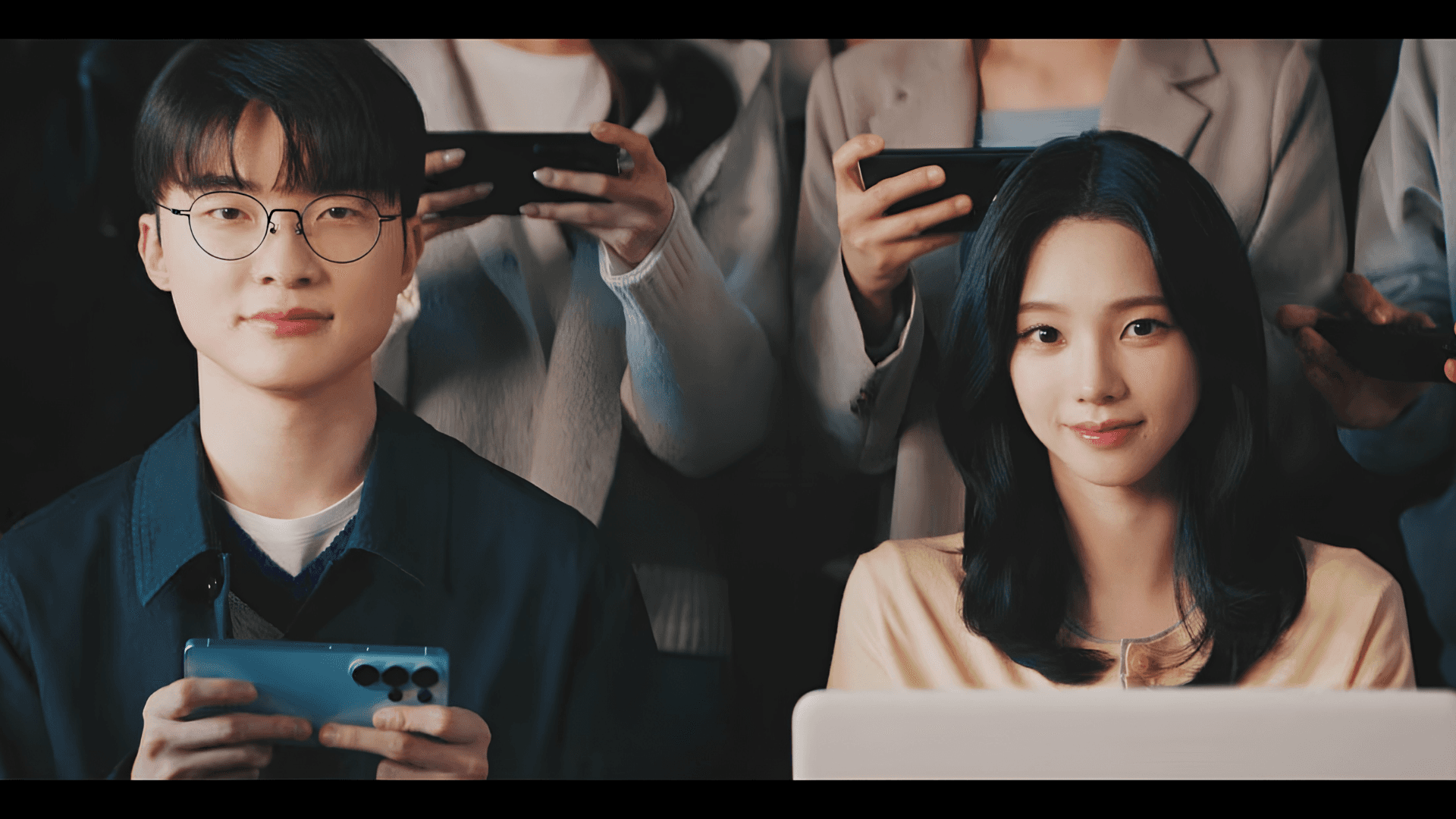
There is a version of this campaign that doesn't work. A platform books two famous faces, shoots them looking good in front of its logo, and calls it a brand moment. The audience clocks it as an ad within three seconds, skips it, and moves on. This is not that version.
Google Play's 'PLAY ON PLAY' campaign, featuring League of Legends icon Faker and aespa's Karina, is one of the most culturally intelligent gaming brand activations to come out of Korea in years. And understanding why it worked tells you something important about where the intersection of gaming, K-pop, and brand marketing is actually heading.
The Setup
The campaign launched in May 2026 with a 20-second teaser: Faker stops Karina on a cherry blossom street and tells her he likes her. The copy read, "A confession from Lee Sang-hyeok, not Faker." Reactions flooded in before anyone had seen the full film. The teaser alone cleared 1.58 million views in a week.
By the time the full series dropped, Google Play had built out a five-episode short drama directed by Dolphiners Films, the production house behind some of NewJeans' most striking visual work. Alongside the main film came a balance game video, serialised short-form clips, and an ending teaser that hit 400,000 views the day before the finale even published.
These are not advertising numbers. These are fandom numbers.
Why Two Icons Made This Possible
It would be dishonest to separate the campaign's performance from the two people at the centre of it. Faker is not just a famous gamer. He is the most decorated player in League of Legends history, a figure with genuine mythological status inside one of the world's largest gaming communities. Karina is not just a K-pop idol. She is one of the defining faces of aespa, a group that has built its identity at the intersection of digital culture, fandom, and futurism.
Putting them together in a romance drama format was not a safe casting decision. It was a genuinely surprising one. The combination felt unfamiliar, almost absurd, and that was precisely the point. Surprise travels. Comfort does not.
The Architecture Underneath
Star power opened the door. What the campaign did with that open door is the more instructive part.
Google did not treat this as a one-off activation. They built a content system. The teaser created anticipation. The main film delivered the payoff. The serialised short-form content extended the story into formats native to the platforms where both communities actually live. Fan easter eggs were planted throughout: the bus number 507 referencing Faker's birthday on May 7th, the route destination pointing to his birthplace. Details designed not for casual viewers, but for the communities who would find them, share them, and turn them into their own content.
The result was cross-community ignition. League of Legends players, aespa's fandom, and a general audience responding to the simple pleasure of two charismatic people in a well-made short drama all ended up occupying the same cultural moment at the same time. That kind of convergence is not something you can manufacture through reach alone. It requires structural design.
This is the distinction that matters most in gaming and entertainment marketing right now: the difference between booking talent and building architecture. Talent creates a ceiling. Architecture determines whether you reach it.
The Unanswered Question
The one thing the campaign leaves open is attribution. The emotional memory most people will carry from this series is "Faker x Karina," not necessarily Google Play. That gap between cultural impact and brand recall is something every platform-level campaign has to reckon with. The content earned the audience. Whether Google Play also earned the association is the brand's job to measure and close.
That said, as a demonstration of what content-first gaming marketing looks like at full execution, this campaign sets a high bar. It treated its audience as participants in a story rather than targets for a message. In an era of aggressive ad avoidance, that distinction is not a nice-to-have. It is the whole game.
Brands willing to design culture rather than simply borrow it will keep finding audiences that paid media increasingly cannot.
If you are a brand looking to integrate into gaming and K-pop culture in a way that builds genuine relevance and long-term impact, Mana Partners helps you make lore, not noise.
Author

Seif Seoudy
We build brands that speak the language of gamers. Authentic, electrifying, unforgettable.


