
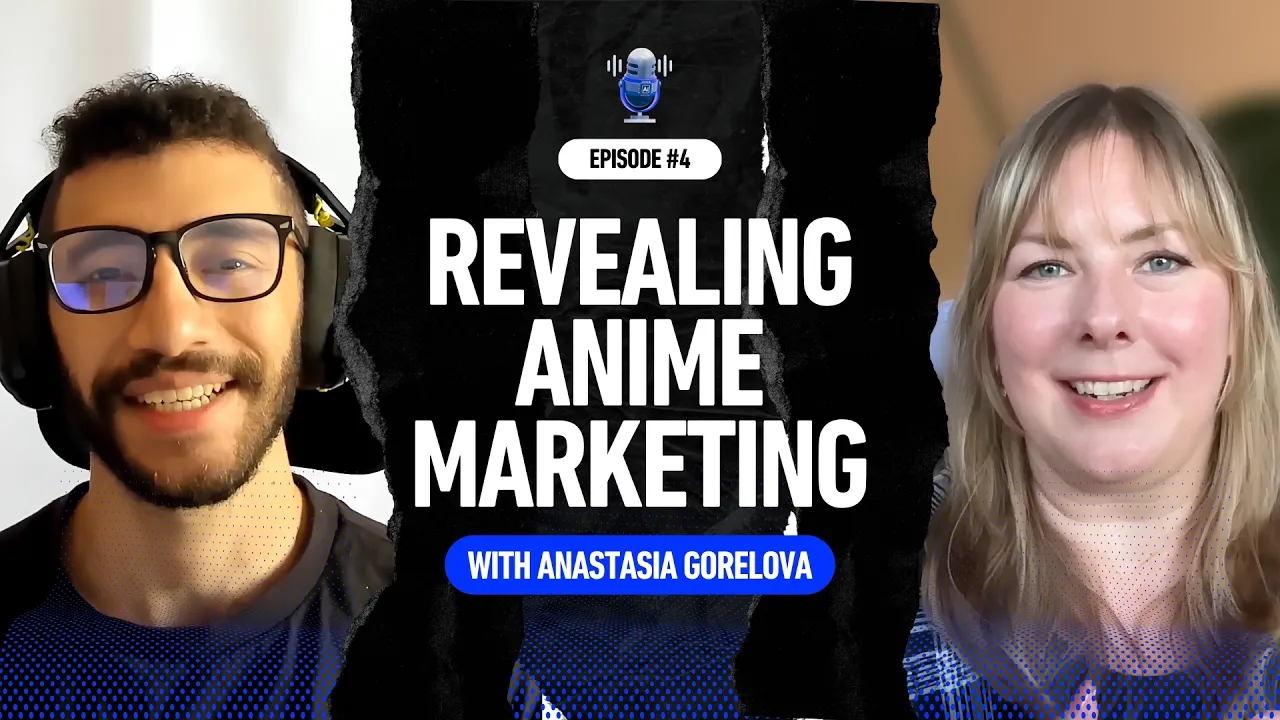
Anime is no longer a niche bet for brands. Cowboy Anime founder Anastasia Gorelova explains how to run an anime collaboration fans actually accept.
Every brief asks for the same thing: reach Gen Z and Gen Alpha. Most answers look the same too, a campaign, a celebrity, fifteen seconds of noise. Meanwhile the audience brands are chasing has already moved into anime, and it is not a niche anymore. In the latest Culture Pulse interview, we sat down with Gorelova to talk about how brands can use anime as a marketing tool without being rejected by the fans who built the culture.
Who Is Anastasia Gorelova and What Is Cowboy Anime?
Cowboy Anime is an anime marketing studio that helps brands connect with younger audiences through anime storytelling. Gorelova has built the studio around a simple observation: people do not want to be sold to, but they do like stories.
Her team is predominantly Japanese, including a Japanese creative director and production coordinator. Every brief gets a cultural read before it reaches an animator, which is how the studio guards against appropriation and keeps the work authentic.
Anime Collaborations: License an IP or Build Your Own
Gorelova frames every anime brand partnership as a fork in the road.
The licensing route gives you speed and a built in audience, but it demands fit. Her example is the Nana x Vivienne Westwood collection. The manga artist was inspired by Westwood, so the designs were already on the page. The collection sold out in about three days, even at prices fans found steep. It was not flawless, and fans noticed where some pieces drifted from the source, but the collaboration felt like homage, not borrowing. Nissin's Attack on Titan noodles took the opposite tone, with flavors mapped to attack modes. Ridiculous, and fans loved it because it understood the source material.
The original route means building your own characters and narrative. Duolingo is the case she points to. It took an IP it fully owns, the owl, and started building a franchise around it. That is slower, but the long term value sits with the brand.
Her warning applies to both routes: do not pick the biggest title just because the numbers look good. Naruto and One Piece are not automatically right for you. More than 60% of anime are manga adaptations, and manga artists write real brands into their worlds. Your brand may already live in the story. The work is finding where.
Why Anime Brand Campaigns Are Hard to Get Wrong
This was the part of the conversation that changed our own assumptions. Gorelova argues that if you do the upfront thinking, there is very little to mess up. The one thing fans reject instantly is motive. If the brand is there only to make money, the audience feels it on the first frame.
Licensing adds a safety net, because Japanese licensors protect their IP and will walk away from a forced fit. Her advice for everything else is unglamorous and effective: find the anime fan on your own team and listen to them, even if they are junior.
Brands also misread the genre. They reach for power ups and fight scenes, while Gorelova notes that action is often only 20% to 30% of an episode. The medium is subtler, slower, and more about daily moments. Her favorite example is Subtitle Club's official Jujutsu Kaisen collection with Toho. The pieces are wearable, not cosplay. To a casual eye the Nanami shirt is a funky leopard print design. To a fan, it is recognition.
That is how you engage culture.
Serialized Storytelling Fits How Social Media Works Now
Gorelova wants brands to move from one off campaigns to continuous storytelling. Algorithmic feeds reward exactly that. Engage with one episode and the next one finds you. Instagram has even introduced features to bundle content as a series. Anime has always been serialized, so the tools for doing this already exist.
There is a commercial upside most marketers miss. A single anime campaign can travel across markets with little to no adaptation, because audiences accept anime as it is. Few formats in global marketing can say that. She also points to Netflix, where she says around 50% of the audience watches anime. Whatever the exact figure, the argument that anime is too niche for a mainstream brand is getting harder to defend.
The Question Every CMO Should Ask First
For any CMO weighing anime and gaming culture, Gorelova's first question is not about budget or IP. It is whether the brand is ready to be open minded and step outside its comfort zone. Story first, visual style second, product third.
The brands that get this right will not be the ones with the biggest license. They will be the ones that understood the audience before it became obvious.
If you are a brand or publisher looking to integrate into anime and gaming culture in a way that builds relevance and long term impact, Mana Partners helps you make lore, not noise.
Author

Seif Seoudy
We build brands that speak the language of gamers. Authentic, electrifying, unforgettable.


